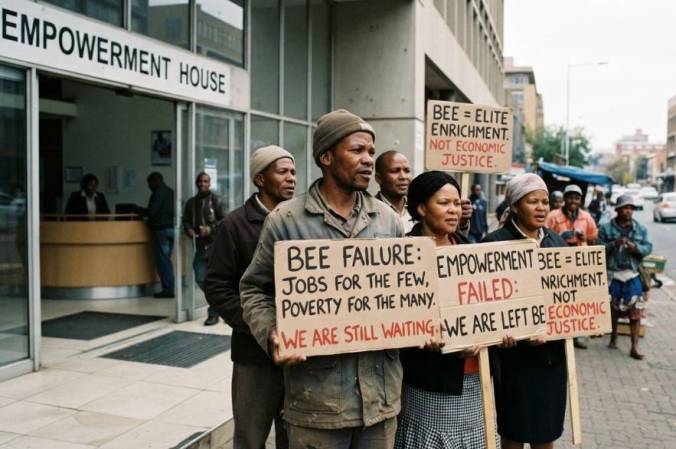
IS BLACK ECONOMIC EMPOWERMENT A SUCCESS, OR FAILURE ?
The Argument to KEEP B-BBEE -
Supporters of B-BEE argue that ending B-BBEE right now would be catastrophic for social stability and would permanently lock millions of citizens out of the formal economy.
• The Economy is Still Untransformed:
Supporters point out that economic power remains highly unequal. For example, data from the Commission for Employment Equity consistently shows that top management positions in the private sector are still disproportionately held by white South Africans relative to the national demographics.
• The "Natural" Market Will Not Fix It:
Proponents argue that without legal pressure, the free market will naturally stick to old networks and established supply chains. B-BBEE is seen as a necessary "market intervention" that forces big businesses to look outside their traditional networks and buy from new, black-owned companies.
• Funding for Skills and Education:
The B-BBEE scorecard heavily rewards companies for spending money on training and university bursaries for black youth. Supporters argue that ending the policy would immediately dry up billions of Rands in private sector funding that currently pays for tertiary education and artisan training.
• Social Stability and Investor Security:
High inequality is a major driver of social unrest, strikes, and crime. Proponents argue that B-BBEE is a form of "social insurance" for corporations. By actively participating in transformation, businesses help create a more stable, peaceful society
The Argument to END B-BBEE
Critics argue that B-BBEE has run its course, has not achieved its original goals, and is actively harming South Africa’s current economic growth.
• It Has Failed to Reduce General Inequality:
Despite over two decades of B-BBEE, South Africa remains the most unequal country in the world. Critics point out that the policy has widened the gap within the black population, creating a wealthy elite while leaving the poorest citizens behind.
• A "Tax" on Economic Growth:
The heavy compliance burden acts as a barrier to doing business. Critics argue that instead of encouraging companies to grow and hire more workers, B-BBEE forces them to spend time and money on legal restructuring, verification audits, and paperwork.
• Deterring Foreign Direct Investment (FDI):
International companies are often hesitant to invest heavily in South Africa because B-BBEE ownership rules require them to give up equity (shares) to local partners. Supporters of B-BBEE argue that ending B-BBEE would unlock billions in foreign investment, which would create more jobs than any empowerment policy can.
• Alternative Models (Class vs. Race):
Those who want to end B-BBEE do not necessarily want to end empowerment entirely. Instead, they argue for a shift to Social-Economic Empowerment. This model would give government support, tenders, and business points based on household income, poverty levels, and geographic location rather than race.