
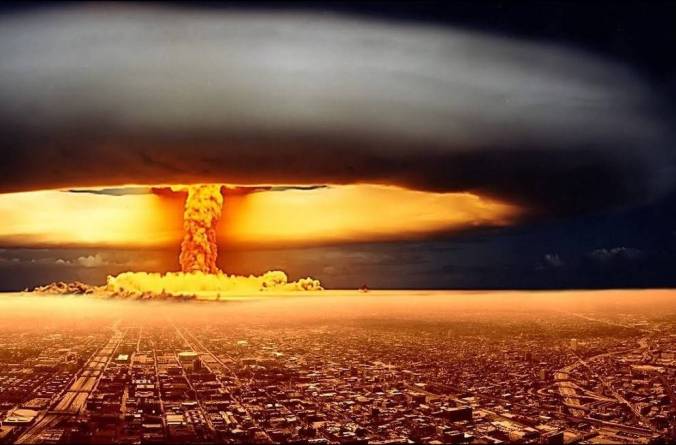
Key Areas of Concern
- The Russia-Ukraine Conflict: European leaders have warned that Russia may be preparing for a wider conflict with NATO. Frequent nuclear rhetoric from Russian officials continues to be a primary source of global anxiety.
- Middle East Instability: Tensions involving Israel, Hezbollah, and Iran have expanded into a regional crisis, with some analysts describing the situation as "ablaze" due to cross-border strikes and the failure of ceasefire attempts.
- Asia-Pacific Tensions: Continued friction over Taiwan and the South China Sea, coupled with rapid nuclear expansion in China (reaching approximately 600 warheads), remains a long-term strategic risk.
Despite the high tensions, several factors act as a deterrent:
- Nuclear Deterrence: The concept of "Mutually Assured Destruction" (MAD) still plays a major role in preventing direct military confrontation between major powers like the US, Russia, and China.
- Economic Interdependence: Global trade networks mean that a total world war would be economically catastrophic for all parties involved, including those not directly in the fighting.
- "Gray Zone" Warfare: Many modern conflicts are being fought through cyberattacks, disinformation, and proxy wars rather than direct, all-out military engagement between superpowers.
- The "Pre-War" Era: Some military officials, particularly in the UK, have suggested the world is moving into a "pre-war" state where the threshold between peace and war is increasingly blurred.
- Regional vs. Global: While regional wars are currently active and devastating, experts often distinguish these from a "World War," which would require multiple superpowers to engage in direct, coordinated combat across several continents.
NO MATTER THE FACTS; PLEASE PRAY FOR PEACE ALL ACROSS THE WORLD - understand our request for peace. The desire for a world without conflict is a deeply held hope for people across the globe.